

We develop micro-robots that can inspect honeycomb cells with the aim of turning honeybee colonies into sensor networks for continuous, long-term ecological surveillance .
FARMAR and NEWBEE

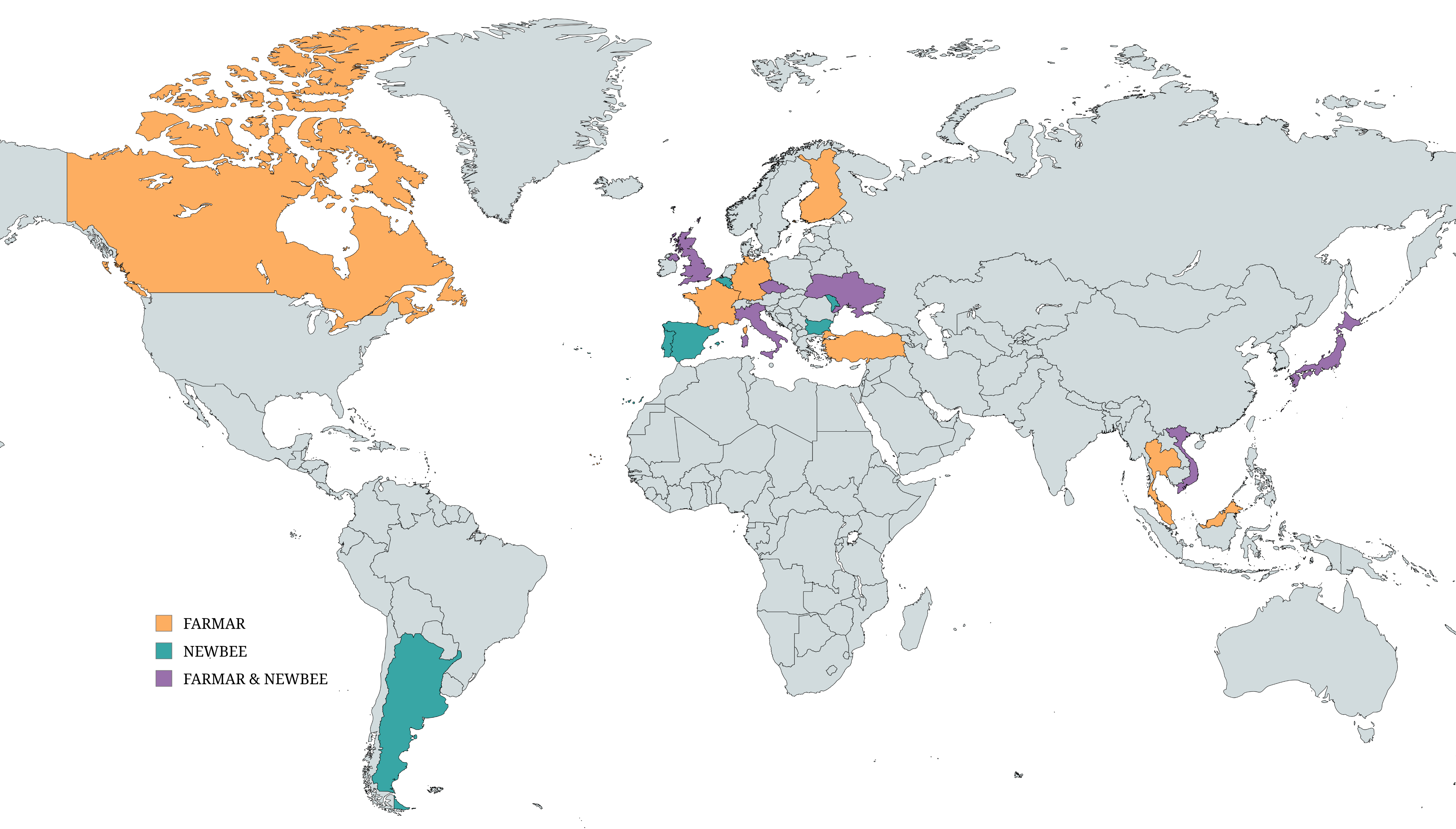

International Collaboration in Agricultural Robotics and Pollinator Research
The ChronoLab participates in two international travel-grant projects, FARMAR and NEWBEE, which support the exchange of knowledge, methods, and research experience between partner institutions across Europe and beyond. These grants allow researchers and students to visit collaborating laboratories, share technical expertise, build joint research directions, and connect complementary disciplines ranging from robotics and artificial intelligence to ecology, agriculture, and environmental monitoring.
NEWBEE focuses on the role of wild and endemic bees in sustainable agriculture. While modern crop production often depends heavily on managed honeybees, many crops require a broader diversity of pollinators, and wild bee populations are increasingly threatened. Through international collaboration, the project addresses how advanced sensing, image analysis, and behavioural monitoring can help better understand pollinator activity, biodiversity, and the ecological conditions needed for resilient agricultural systems.
FARMAR addresses the future of agricultural mechanisation under climate pressure, labour shortages, changing rural demographics, and the need to reduce chemical inputs. The project explores farmer-in-the-loop robotics and AI systems that adapt to local agricultural practices rather than replacing them. Particular attention is given to heritage-aware farming systems, where traditional knowledge such as terracing, intercropping, and water management can be combined with modern robotic tools for precision agriculture, non-chemical crop care, and long-term resilience.
Together, these projects strengthen our laboratory’s international network and connect our research in robotics, computer vision, sensing, and autonomous systems with urgent challenges in agriculture and environmental sustainability. The map above shows the participating institutions involved in these collaborations and highlights the international exchange enabled by the FARMAR and NEWBEE travel grants.
